Musicians: Here’s How to Overcome Stage Fright (my story)
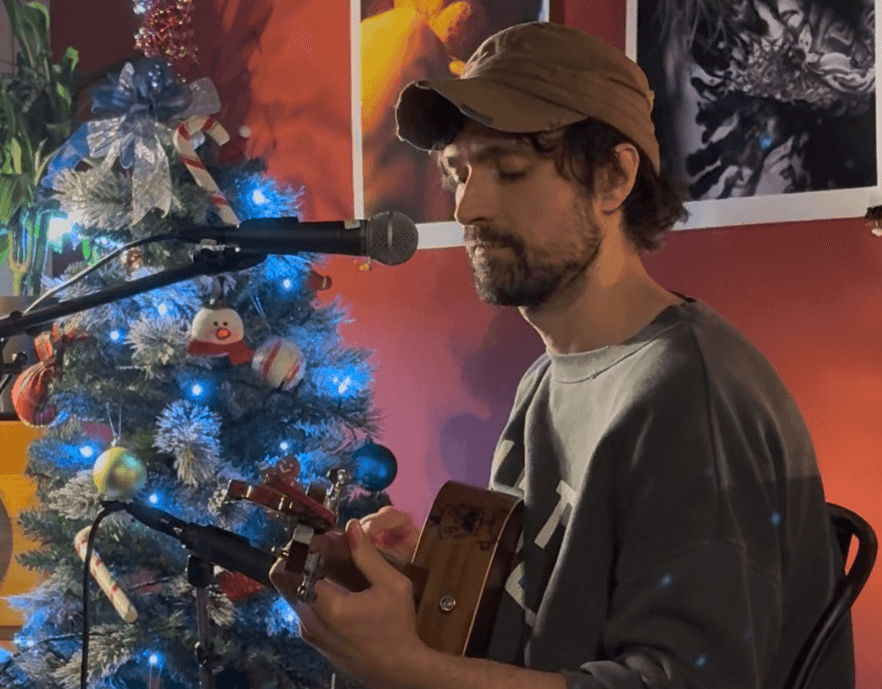
Me playing my first live gig; Dec. 2025, Tokyo
I did it. I finally had my first gig. It was at a live house in Shimokitazawa (a hipster town in Tokyo). And I feel freaking amazing——I finally faced my biggest fear.
And no, I didn’t fly 6,500 miles to a town where nobody speaks my language or knows me just to play a secret gig.
(but low key, I support that lol)
I’ve been living in Japan (on and off) since 2017ish. Since then, I’ve had a few public music moments, but they were always casual offbeat sessions with friends. Nothing formal.
Deep down though, I wanted so bad to play live. Or to have a band. Or to see my name on a flyer. I wanted the confidence and ability to show up on stage and share some melodic things I made.
But my whole life, I was terrified of playing live (and I can’t recall the inciting incident that created this fear). So I did what needed to be done.
I faced my villain.
This post shares how I finally overcame my performance anxiety. Here’s how to overcome stage fright as a musician or singer.
First, Realize How Important This Is—You Must Face Your Fear
“If you’re afraid of something (and it’s important to you), then you must do it. It’s probably connected to your greatest power or life purpose.”
The more we care about something, the more weight and worry we can give it. I avoided sharing music my whole life, because I loved it so much. It’s who I am, a core part of my identity.
So if that flops, it’s like a part of me is also flopping. So yea, it was way easier to stay in limbo and on the sidelines, living in that safe space of “what if…” or “maybe someday…”.
But as I got older into my 30s, nothing changed. I had no sudden confidence, feelings of readiness or perfect situation that arose.
And I never reached any of my goals. None of my visions came to be.
I could feel the weight of this stage fright turning into regret, and honestly, that’s more scary than any performance. Regret is chronic.
Choosing comfort over the discomfort of pursuing a dream never leads to safety, happiness or wellbeing. It’s a trick because discomfort feels bad in the moment. Our monkey brains are wired to recognize such threats, so we run, hide or freeze thinking we’re protecting our survival.
But dammit, know this: the greatest comforts in life come after the greatest discomforts.
It’s the hot shower after a day snowboarding.
Fully enjoying a slow weekend after a hectic week.
The pride of pushing through your fear and showing up for yourself (like doing that first show) when you know you were scared and just wanted to run back to that safety bubble.
Push on, friend, push on.
Everything operates according to principles of balance…yin and yang. Without the dark awkward moments, the light and bliss are never experienced (not really).
I want to look back when I’m older and have the peace of mind knowing that I showed up and at least tried…even if it was ugly or awkward.
Stage fright is the villain you need to beat in order to level up to the next level of the game. And aren’t you curious to see and explore the next level?
I also like to think that somebody somewhere is waiting for you to show up and do your thing. Somebody somewhere looks up to you. Somebody somewhere can only be inspired by your particular way of saying/singing things.
You are inspiring (or will inspire) somebody somewhere to do something great. Your role is bigger than you think.
But if for nothing else, at least do it for the plot. We live in a movie life, so let’s shake things up and make it worth watching.
You’re the director, writer, actor and producer of your life.
How to Overcome Performance Anxiety as a Musician (14 tips)

The tips in this post are a list of the realizations and revelations I experienced while preparing for my first live gig and the moments that followed the performance.
I finally overcame my performance anxiety.
I’m not saying my stage fright has evaporated completely, but it is hella quiet now. It’s like…just a faint whisper.
1. Community
Have at least one good musician friend.
So often, I’m as good as the company I keep. We become the average of the closest people in our life.
But I spent most of my life without any core musician friends. So when it came time to putting myself on stage (or even promoting my work), I felt extra alone.
But having other musician friends sets you up for mutually assured growth and success.
You push each other. You support each other. You have each other.
The only reason I landed (and did) my first gig was because of one close friend. He’s an incredibly talented musician, artist and performer here in Tokyo and is very plugged into the creative community here. So naturally, he knows venue owners.
He reached out to his venue owner friend and set things up for me. He vouched for me and I become the first performer of an acoustic night with three other talented musicians on a Friday in December.
My name was on a flyer for the first time.
Find yourself some friends who will either push you outside of your comfort zones or who will be there to grow with you. Strength in numbers, as they say.
I would have never gone on stage if I was left alone.
2. Micro Dose Your Live Performances
I realized this one by accident. I was constantly practicing my set list in private, alone in my room.
But my girlfriend insisted on hanging out. And she wanted to listen to my music. So I opened the door to my “private session” and she became my first “audience”.
At first, I was over-thinking and over-explaining. But then I let go and leaned into the emotion of the music. I sort of forgot she was there and I started performing authentically (for an audience of one, yes, but still an audience).
This moment made me realize the power of micro dosing my live performances.
(it’s not just for gummies)
I used to break down even if I tried playing in front a few friends. Because I never practiced in front of anyone. So I rushed the sound, talked too much and felt shy.
Rather than jumping straight onto stage, practice getting comfortable in front of a few close friends or some family…one person at a time.
Start with one person. Maybe try karaoke. Eventually, do some busking on a quiet street corner.
The stage is just a series of small steps away.
3. Transmute Anxiety Into Excitement
Both anxiety and excitement are experienced in a similar way and area of the brain and body. So with an act of intention and belief, you can transmute feelings of anxiety into feelings of excitement.
Rather than feeling anxious about performing live——will I make a mistake? will my voice sound bad? will people clap? will I forget my set list?!——I practiced shifting my energy and reframing those questions.
Because anxiety and excitement are similar.
You can feel that, can’t you?
They show up in similar ways in the body. They mimic each other.
So I started becoming excited to share my guitar playing and ideas with just 2-3 people who I knew would be in the crowd. They’d never heard me play before, not really.
And I knew deep down that I do have something to offer the music community. And that’s exciting. However small that offer may be, I can make a ripple in the pond.
So practice shifting your anxiety into excitement. Be delusional if you need to.
Those flutters and butterflies in the stomach are the same feelings of excitement. So relabel your anxiety and carry on.
4. Swap Fear for Curiosity
While we’re in the business of transmuting energy (you mystic, you), let’s tackle another emotion, probably the core feeling we’re dealing with: fear.
I was watching a random podcast on the week of my first gig. The guest started talking about facing your fears in life.
Great timing, right?
He explained how powerful a simple perspective shift can be.
Rather than approaching a situation with fear (because of potential ghosts or monsters lurking around corners, metaphorically), approach the scary situation with curiosity.
Like an adventurer.
“Oh, this is interesting and fun. I’m so curious to discover what’s behind this door. I’m in the unknown and have no idea what’s next. I feel so alive. What a rush.”
Practice shifting your moments of fear or anxiety into genuine curiosity.
Be like a traveler. Explore this new territory with a curious adventurous mind.
5. Use An Alter Ego
“Like an actor getting into character, I like to become someone different, at least somewhat. My alter ego is the character.”
Alter egos help you embody a different personality, like someone who is not afraid to get on stage.
This tip completely changed one of my close friend’s performance anxiety. She’s a pianist and has performed hundreds of shows, but she still felt nervous every time.
So I told her to create an alter ego. A new name and a new persona.
It worked.
It worked really well for her. And I could feel her energy and excitement about this simple mind hack.
So make your own alter ego. As artists, this is pretty common anyways (and can actually segue into crafting your visual identity and brand).
Create a persona of someone who shows up and plays live with style and confidence. Dress like them, talk like them…become them.
But remember, a good alter ego is grounded in truth. Your alter ego is a reflection of you. You’re keeping your true voice and authenticity, but short-circuiting the baggage and fear-based stories we all have.
6. CHANGE THE STORY YOU’RE TELLING YOURSELF
Your thoughts are not silent or harmless. The body hears what the mind thinks.
Read that again.
Your body is listening and hears what your mind is constantly thinking.
I saw a video the night before my first gig that sort of blew my mind. It was just a still video of a woman looking at the camera and making no movements (at least, not perceptibly).
The only thing she was doing differently was changing her internal dialogue——from telling herself positive affirmations to negative ones.
She wasn’t saying these things out loud, but the difference was immediately visible. Her face changed. She looked tired, sad and lethargic.
The mind is powerful. And so many of our thoughts are just subconscious stories based on past trauma, false information or misremembering the past. So it can take a lot of energy and willpower to start changing that script.
When it comes to overcoming stage fright, you probably have a whole book of untrue narratives you’re telling yourself.
Flip the dang script!
Start telling a different story. Start believing a different story (even if it feels silly or delusional).
Let your body hear different thoughts.
Start practicing this now. Repeat these new mantras in your mind everyday and up until the last moment right before play on stage (and then throughout your performance…and afterwards too).
Start by becoming aware of negative thoughts. Stop and observe them——don’t judge. Then replace them with new, better thoughts. Repeat until you’re rewired.
Welcome to your new brain.
Rather than recycling through more negative thought cycles, start telling yourself positive optimistic things. Believe in yourself and love yourself and your sh*t.
Feel it. Practice it. Get good at it. Even if it feels cheap or silly, your body is listening. And a tense body in a state of fear cannot perform.
But a relaxed body in a state of chill will outperform.
Go from “what if I forget my song!?” to “pffff, even if I make a mistake, I always handle those super smooth and can make things sound purposeful.”
7. Prepare Prepare Prepare
A lot of my performance anxiety came from the fact that I knew, deep down, I was not prepared.
For my first live experiences, I didn’t practice enough, I lacked focus and my set list was just a collection of hastily-prepared unfinished songs.
I had the intention to just “wing it”——ah yes, a laissez-faire attitude and bad habit that pops up everywhere in my life.
But something interesting (unsurprisingly) happened when I truly prepared for my first official gig. I felt confident.
The butterflies weren’t gone completely, but they were chill.
Go figure lol.
So here’s the annoyingly obvious tip: focus on your set list and practice it…a lot!
Make a list of songs and work on them for 2-3 hours a day. Even after just a couple weeks, you’ll be surprised by how much calmer you feel about playing live.
Also, practice your set on an actual mic and speaker to create a simulated situation. Get used to how you sound, how you play your instrument and how it feels to sing into a mic.
Because trust me, it’s different. And honestly, I got a huge confidence boost after practicing on a mic.
I realized a few things: 1.) how to position my mouth and how soft or loud to sing, 2.) I was pushing WAY TOO HARD for years, and 3.) my voice sounded different amped up, but it still sounded good and I now knew what to expect.
8. Energy > Technique
This is your permission slip to stop trying (or expecting) to be perfect.
You don’t need to blow the crowd away with some insane vocal run or instrumental magic.
Forget that. That’s not what people will remember or resonate with. They will remember and become engaged with your energy.
Technique and objective skill aren’t bad (of course), but your freaking vibe is way more important.
I made this realization (and subsequent switch in how I practiced) a couple weeks before my gig. It was a realization I had while micro dosing my practice sessions.
After loosening up and playing from the heart, I tapped into a flow state and let my emotions actually show. My practice session (for that one person) turned into a dynamic and emotive experience.
I wasn’t just sharing my music. I was communicating emotions, stories, vulnerability and something raw, real and human.
I was sharing my energy.
And THAT is exactly what my audience of one loved the most. She didn’t care how catchy the song was or how intricate my bridge was. She got inspired, engaged and excited because I was singing and performing from the heart, not the head.
Some notes may be missed, mistakes may arise. But if you’re performing authentically and energetically, none of that matters.
Plus, you’ll be more relaxed and will handle any mishaps with far more ease.
Don’t bring your brain to the show.
(this is why it’s extra important to practice practice practice——so you don’t need to “think” about what lyrics or chords are next, it’s all ingrained and second nature)
9. Open With (and focus on) Your Aces
Don’t try to belt crazy high notes or show off with a hyper-intricate performance (unless those things are in your comfort zone). Keep things simple and focus on your aces.
As you get more comfortable, you can expand into the belting and more advanced stuff.
For my first gig, I front loaded my “aces” towards the beginning of the show. This set the stage (pun intended) and gave me confidence straight out the gate.
I started with the songs I knew best in the key I was most comfortable in.
So what thing or things are your major strengths in music? Highlight those early on to establish that context of “I got this and I know exactly what I’m doing.”
For example, singing in front of people on a mic is probably the biggest thing I have stage fright about. My weak points are starting a song or set with difficult notes (ones sitting extra low or extra high). So I started my set with a “warmup” song, sitting perfectly in my sweet spot for singing with notes I feel totally confident in hitting and sounding decent at.
But I also continued to highlight my aces throughout the set (continuing to sing in my comfort range and leaning into my choppy-technical style of playing guitar).
My aces help carry the weight and burden of playing live. So even if I butchered a note or two…something else could pick up the slack.
So what’s your ace?
10. Loosen Up——Don’t Be So Serious
Trust me, I get it. Your music, your goals and your work are all important. But for the moment, set that aside.
How important is this really? And can you realistically care less about it?
There’s a time to care fully and a time to be loose. A balancing act, as it were.
And luckily, we’re not performing open heart surgery here. We can make mistakes…it’s allowed and even normal/expected.
For me, overcoming stage fright is much easier when I care less about the show, my music, my brand, my goals, etcetera.
But I’m not talking about apathy here either. I’m talking about swapping seriousness for fun, levity and curiosity.
Be light and carefree about your show. Don’t take this or life too seriously. Be more curious and detached——like, okay, let’s see where this goes. I’m open to things unfolding in any surprising way.
Detachment is an attractive energy. Don’t try to control everything. Ride the wave.
When we assign too much value to something (or someone), we tend to worship it, which can actually push it away…giving off a needy energy or suffocating the thing we claim to love.
So give your performance some room to breathe (by caring less about its outcome).
11. Reframe Your Performance Mindset
No list would be complete without mentioning mindset.
The mind is powerful and spends most of its time telling us stories that aren’t even true. So why not practice reframing things?
Tell new stories. See the situation with new perspectives.
For example, think about a far worse or far more stressful situation. Feel that. Imagine that worse scenario fully and emotionally. Now snap back to your current challenge——it’s not quite as scary, is it?
Here’s another one: instead of having fear for this thing, have gratitude for it. Practice thanking the fact that you have the opportunity to play live and face this challenge. Because on the other side of it, you level up and get stronger.
12. Let Your Friends Support You
For the longest time, I hid my music from everyone——friends, family, coworkers…
But I realized something (while getting ready for my first gig). I’M SO HAPPY MY FRIENDS ARE COMING TO SUPPORT ME!
I’m not looking out to a crowd of strangers staring at me, I’m looking at my friends who love and support me no matter what.
I’m simply putting on a little show for them.
13. Take Space, Dammit
A close friend of mine recently called me out for being too timid with my energy. The context was unrelated to music, but the lesson is there.
“Dude, take up space and stop being nervous to do or say what you really want.”
Great advice and duly freaking noted——good friends call you out and help you level up.
So here I am, showing up to that stage like I belong there. Because I do.
You do.
Together, let’s take up space and be unapologetic for it.
14. Just Do the Dang Thing
Rip off the bandaid. You’re ready.
This is probably the most important tip to overcome stage fright: just do it already.
It might be awkward, you might bomb…everyone does.
But you can prepare and use the tips in this post to give yourself the best possible chance of having a good show and finally putting your performance anxiety to rest.
You got this. Do your thing.
Later ✌️